Layout Type: Original Template

Aisha stands outside on a job site

Electrician Apprentice Trades the 9-to-5 for a Job Site

Q: What motivated you to become an electrician?

“I like troubleshooting. I like tinkering, figuring things out. Electrical allows me to do that on a daily basis — not just when something isn’t working, but figuring out the right positioning of light fixtures, reading prints correctly, running conduit around sprinkler heads, plumbing and HVAC. It’s like a puzzle, and I feel like electrical was the best trade that allowed me to do that.”

Q: How did you find Chicago Women in Trades (CWIT)?

“I had spent nearly 15 years as an administrator at Stroger Hospital — I managed three clinics — and COVID really opened my eyes. I thought, ‘Aisha, do you really want to do this for the rest of your life?’ So my husband and I started flipping homes. An electrician who came into one of the houses stayed maybe an hour and a half and charged us $2,000. I said, ‘What did you do for $2,000?’ And he said, ‘You could do it too.’ So I took him at his word and started Googling. My search was ‘women in the trades.’ I didn’t know anything about CWIT, but I felt it was the best way for me to enter a male-dominated field with no prior background. I ran into that electrician later at a union meeting. He was in disbelief. He started taking me around, telling people, ‘I told her about the trades and she entered the trades!’

“CWIT was the best decision I could have ever made. CWIT lets you see yourself in a trade before you even apply, thanks to their access to apprenticeship schools. Spending a week at the Carpenters, a week at IBEW, a week at the Plumbers — you can visualize yourself in that trade. That’s very important for someone like me, a woman coming from behind a desk in heels and suits.”

Q: What part of Women Build Illinois was most valuable to you?

“Having a support system. Having the conduit out back to practice, having a set of tools assigned to us to take care of, just like you would on a job site. CWIT creates that mindset so that when you do step onto a job site, you’ll be prepared. The fitness instructor put on pressure, that good criticism: how to properly squat, how to properly carry material. And then there’s Miss Kitty, who tutors students struggling before they take the exam. CWIT has it all.

“If I’m unable to pass the hand grip test, I can come back to CWIT, and they have hand grips for me to take home. If I’m struggling to carry conduit, CWIT will call a former IBEW graduate to show me how. It’s a plethora of resources.”

Surveyor Carol stands in a field with equipment

Tech Engineer Apprentice Discovers Power in Precision

Q: Why did you decide to become a technical engineer?

“Honestly, I had no idea what a tech engineer was before Chicago Women in Trades. On the first day of WBI, our teacher asked if anyone knew what a tech engineer does in the trades, and no one did. They encouraged us to take the test anyway—partly for practice before the apprenticeship aptitude test. I had already applied to the electricians, so I figured, why not?

“It’s basically surveying. At my company, we do work for industrial, civil, and commercial sites, looking for property corners—almost everything. Some days I’m in an empty field, other days I’m on a busy construction site. It’s a lot of math (angles and geometry), and I’ve always loved math. I knew going into the trades that I wanted something math-related.

“The more I learn, the more I think it’s one of the coolest jobs. It feels powerful to be the person who helps all the other trades: ‘This is where you need to work from. This is your elevation. This is your grade.’ It’s such an important job.”

Q: How did you find Chicago Women in Trades?

“I was researching ways to get into the electrician’s program. I saw that Chicago Women in Trades had openings for the WBI program. I went in with an open mind. If there was another trade that was really cool, I’d consider it.

“I like that they prepare you for the test specifically, which is what I really needed. I had no idea what I was walking into, but I was just researching ways to get an advantage because I knew I wanted to get into the trades.”

Q: What was most valuable about your experience in WBI?

“The discipline. I was unemployed for a bit before WBI, and the program really woke me up. I had to focus in class, and when I got home, I had to maintain the same discipline—making sure I was caught up on homework, ready for the next day, and prepared to succeed. They treat it like an apprenticeship program.

“I started committing to everything, both mentally and physically — with the workouts, and mentally with the math. I had to find my weaknesses and fix them.

“That discipline pays off now in my apprenticeship. Being able to focus, ask the right questions, understand the terms and have general industry knowledge. You have to learn things on the fly, and you have to learn as much as you can while you’re an apprentice before you journey out.

“ And being able to quickly find answers when numbers are multiplied or divided by tens or hundreds. That stuff has really helped me in the field.”

Q: What surprised you most during training?

“My resilience, probably. I remember when we did material handling—it was really tough. Some things were so heavy, and we were tired. I could see other people kind of met their limits, and that happens.

“I was going through so much emotionally and physically, and I couldn’t believe I came out of each day as a better person—and especially out of the program as a better person. CWIT showed me that I have resilience. I did not realize that.”

Q: What does a typical workday look like?

“There are some jobs as a surveyor where we’re out before any construction work is done at all. We’ll be staking out where the gas line is, where the easements are—things everyone’s going to need to know before they start working.

“Those days in the middle of a field where there’s literally nobody around, just empty farm areas or being out in nature in the middle of nowhere—those are the days I like most. It’s just cool to be out there by yourself, where you can focus on yourself and your job.

“We go in with a plan, we know what we’re staking, and the office gives us our points. Then we have to find them. Sometimes we use GPS, sometimes we use the robot. I’m familiar with both now, so I can check and find the point.

“We get our equipment out, come up with a plan, then I help set it up. It’s always the same process to start: there’s a planning phase, then we go find our control or check in, and then do whatever we have to do. The actual job is usually easy, as long as nothing goes wrong. It’s pretty straightforward—lots of walking, lots of hiking. A typical day is like 20,000 steps, easily.”

Centering Equity in Workforce Development

By Lark Jackson

When the Industrial Arts Workshop in Pittsburgh launched its first young all-women’s Weld Scholars cohort in October 2025 — the organization’s first cohort exclusively for young women — 14 students enrolled in an eight-week welding program that resulted in a certification and a clearer sense of where they might go next. While IAW has long supported a diverse range of students, the organization partnered with CWIT to create an all-women welding cohort because it recognized the value of providing young women with a learning environment intentionally designed for them. This program was not incidental; it was purposefully developed from the outset through a gender equity lens provided by CWIT.

Chicago Women in Trades’ Equity Resource Center (ERC) works with community organizations like Industrial Arts Workshop (IAW) to do exactly this kind of work — providing technical assistance and funding through the Women in Apprenticeship and Nontraditional Occupations (WANTO) grant, a U.S. Department of Labor federal grant administered through the Women’s Bureau. With these resources, IAW didn’t just offer welding instruction; it built a program designed to recruit and retain young women in an industry where women are underrepresented.

Statement in Response to EEOC’s Rescission of Workplace Harassment Guidance

Chicago Women in Trades was alarmed to learn that the Equal Employment Opportunity Commission (EEOC) rescinded its Enforcement Guidance on Workplace Harassment, a comprehensive tool that assists both employers and employees with understanding, preventing and addressing workplace harassment and discrimination, at its January 22nd meeting. This key resource provided details and more than 70 examples to illuminate the pathway to safer job sites for all workers. When it was issued in 2024, it was the first update in 25 years and illuminated federal protections for workers based on their race, national origin, religion, sex, disability, and age.

This rescission happened with little notice and no opportunity for public comment, despite the significant public input that informed the guidance’s creation. In fact, CWIT was one of more than 38,000 comments supporting the strengthening of EEOC guidance, including clarifications that protections based on sex include sexual orientation, gender identity, pregnancy, childbirth and related medical conditions.

According to a 2021 national survey conducted by the Institute for Women’s Policy Research of 2,600 tradeswomen, one in four reported experiencing near-constant sexual harassment, while one in five women of color described being subjected to always or frequent racial harassment during work. Chicago Women in Trades’ comments reflected on the real-life experiences of tradeswomen facing harassment on the job to ensure the strongest guidance would be issued by the EEOC.

On Wednesday, January 21st, Chicago Women in Trades attended a press conference with Women Employed, survivors, labor leaders and local officials to stand in opposition to the rescission of the guidance. Leaders from the Illinois Department of Human Rights, Cook County Commission on Human Rights, Chicago Commission on Human Rights, YWCA Metropolitan Chicago, Equality Illinois, National Employment Lawyers Association of Illinois, and CWIT’s own Cristina Barillas-McEntee stood together to make clear: workplace harassment remains illegal under federal law, and local enforcement agencies will continue protecting workers’ rights.

Cristina shared why tools to fight against harassment are so critical for tradeswomen, describing an environment where “your every moment is being watched; you are under a constant microscope,” and hyper-vigilance is required to stay safe. After the recent murder of a welder, Amber Czech, on her job site in Minnesota, these threats that tradeswomen face can have devastating consequences.

The guidance was a crucial resource when working with employers and apprenticeship programs to understand their obligations under federal law, a key tool to developing safe work sites. It also expanded workers’ understanding of their rights, particularly those who experience harassment across intersectional identities. Its absence will lead to further isolation of women and other gender minorities and people of color in the construction trades, and likely result in lower retention rates across underrepresented groups.

CWIT is opposed to this rescission, and is particularly disheartened that it happened without opportunity for input from the very communities, industries and populations most impacted by workplace harassment. We are grateful for partners, like the Illinois Department of Human Rights, who are upholding worker protections and community education across the state, and will continue to advocate for strong enforcement of laws that create dignity and safety at work for all.


If you are a contractor, an employer, a construction registered apprenticeship program, a training provider or an industry stakeholder who is invested in creating and maintaining a respectful and healthy work environment for trades workers, please contact CWIT’s Equity Resource Center at consulting@cwit.org and join us in our effort to establish work environments where everyone can thrive.

Consolidated Flooring and Chicago Women in Trades Are Reshaping Construction Together

When Consolidated Flooring of Chicago began bidding on the Obama Presidential Center, they encountered something different from typical diversity requirements. The project’s “spirit” called for meaningful partnerships, not just paperwork. That’s when Executive Vice President Kristy Burlingame and Director of National Engagement and Talent Leadership Michelle Heron-Means discovered Chicago Women in Trades—and found an organization that matched their own conviction that meeting diversity goals isn’t about compliance, it’s about changing how construction gets done.

Q: How did your partnership with Chicago Women in Trades begin?

Kristy: “When we were bidding on the Obama Presidential Center, the requirements were more meaningful than the typical ‘would you like to be a sub’ approach. It was about creating mentor-protégé strategies and making a real impact. We connected with Chicago Women in Trades through the Lakeside Alliance’s community outreach program (they served as the construction manager on the project) and the relationship just took off.

“For years, I’d been frustrated by hearing that women don’t want to work in flooring—that the work is too hard on backs and knees. I knew that wasn’t true. When CWIT engaged with us, I thought, ‘let’s prove this isn’t just a man’s trade.’

“What made it click was that CWIT came to a PFIA (Professional Flooring Installers Association) meeting and said, ‘We exist, we want to help you with community outreach for the Obama Library.’ I immediately reached out. They kept responding, wanted to help, and we could see the difference they were making. Other organizations might have great programs, but CWIT was the one that kept showing up.”

Q: What does the partnership look like in practice?

Michelle: “We bring students into our office for conversations about what Consolidated Flooring does, then our project managers take them to active job sites. They spend the day walking through Chicago, seeing what a real project looks like, meeting project executives and general contractors, and asking questions. Afterward, I take them to lunch, and we talk about what they really thought—what surprised them, what they liked, what they didn’t.

“I’ve never had a project manager turn down these visits. Even when they’re busy, they’re excited to show off their projects and talk with students. It’s rewarding for everyone.”

Kristy: “These experiences are critical because this industry is as much about who you know as what you know. We’re not just trying to convince them to enter flooring—we’re exposing them to the entire field. If someone sees the painters and gets curious, we can connect them. Now they have one more person to call if they’re in a job they’re not loving and don’t know where else to turn.

“The mentoring and guidance Michelle provides is what doesn’t happen early enough for girls. They don’t get that insight or that encouragement. Having those relationships matters.”

Q: How do you approach meeting diversity goals as a business?

Kristy: “When we’re bidding a job, and they list all these requirements—thirty percent for this, twenty-five percent for that, or X amount of women—I just say: ‘Whatever your diversity goals are, check yes for all of them. There’s nothing we need to discuss. There’s nothing we can’t meet or do. Just say yes to everything.’

“We’re the only ones sitting in interviews saying that. Everyone else is saying, ‘Well, if the union doesn’t have them, I don’t know if we can get them.’ We don’t need to find other people to recruit because we have CWIT helping us. That’s the difference. And at this point, it doesn’t feel that special anymore because we should all be doing this anyway.

“A lot of the individuals working on the Obama project we found through CWIT. They just happen to be women. But see them as local, skilled individuals. Sometimes I’m on the job site, and I see women working, and I think, ‘Oh right, these mechanics are women.’ It’s become that natural.

“What’s also interesting is bringing people who live near the project to work on the project. We have a Google map showing the locations of all our installers. If we’re doing a job in Rockford, we’re not sending someone from Indiana. The Obama project helped us get even more micro about this—finding mechanics nearby, training them across different flooring types, then keeping them working on projects in their communities.”

State Legislators Visit CWIT to Understand Barriers Facing Tradeswomen

When state legislators understand what tradeswomen face on the job, they become stronger advocates for change. They pass laws to improve access to career paths and enhance worker safety, and make budgetary decisions on how the state will invest in workforce development and fund public construction projects. That’s why our policy team works to bring elected officials directly into conversations with students, graduates, and staff—creating the informed relationships needed to drive meaningful change.

This summer, CWIT welcomed Illinois State Representatives Margaret Croke (12th District), Theresa Mah (24th District), and Kevin Olickal (16th District) during the 2025 legislative break. These visits gave legislators firsthand insight into CWIT’s programs, the impact of the recent federal attacks on equity initiatives and worker protections, and the policy priorities on CWIT’s 2025 State Agenda.

Representative Croke said of her visit, “I am inspired by CWIT’s work. They are not only teaching essential skills but are building the necessary support networks and showing women what is possible in a field where they are historically underrepresented.

“And I am proud that HR-161 has been adopted, which affirms Illinois’ commitment to equal employment opportunity and economic equity for women and all people. It is a testament to CWIT’s mission. By investing in workforce development, they ensure that people from all backgrounds have access to stable careers in the trades with strong wages and clear paths for growth.”

Tradeswomen Advocates Help Pass House Resolution for Gender and Racial Equity

In the face of mounting federal attacks on workers’ rights and hard-won gains in gender equity in the trades, the Illinois House of Representatives has taken a powerful stand for tradeswomen and underrepresented workers across the state by adopting House Resolution 161 (HR 161) today, October 30, 2025.

Introduced by Leader Lisa Hernandez, this resolution reaffirms Illinois’ steadfast commitment to equity, accountability, and investment in workforce opportunities that serve all Illinoisans, especially women and people of color. On March 5th of this year, over 200 tradeswomen and advocates from across Illinois gathered in Springfield for the second annual Tradeswomen Take Over Springfield advocacy day to push for greater opportunities for women and minorities in construction trades. Chicago Women in Trades staff and tradeswomen met with legislators, shared their stories, and urged adoption of HR 161.

Despite representing nearly 50% of the workforce, women make up less than 5% of those working in the construction trades and tend to be underrepresented in high-wage, unionized careers. Structural barriers like access to affordable childcare and workplace harassment continue to hold women back from these high-quality, family-sustaining jobs. Earlier in May, the Trump Administration gutted the Women’s Bureau, the only federal office dedicated to women’s rights in the workplace. Additionally, recent federal rollbacks have weakened agencies, such as the Equal Employment Opportunity Commission (EEOC) and the Occupational Safety and Health Administration (OSHA), that protect workers from discrimination, harassment, and unsafe working conditions. Across the nation, gender and racial equity in the workplace is under siege.

This resolution reinforces that public dollars must support contractors who uphold the values of inclusion, safety, and fair opportunity. HR 161 lays the groundwork for continued progress and provides the clear guidance contractors need to do better. It builds upon the state’s investments in training and workforce inclusion, setting the expectation that future Illinois projects will not only help build up our infrastructure but also our workforce.

While the adoption of HR 161 is a victory, the fight isn’t over yet. CWIT urges you to sign up for our advocacy list to continue pushing for equity in the trades and to stand with the thousands of women and minorities who are ready to build Illinois.

CWIT Honored with Courageous Client Award for Standing Against Anti-DEI Orders

Fighting for Our Community

The legal challenge emerged when federal executive orders threatened to eliminate CWIT’s ability to serve our community. Rather than abandon our mission, we filed suit with representation from the Lawyers’ Committee and other leading civil rights organizations.

In April, we secured a preliminary injunction from the U.S. District Court for the Northern District of Illinois, protecting our federal grant funding and blocking enforcement of key provisions nationwide while the case continues.

“Chicago Women in Trades took the Trump Administration head-on in court,” the Lawyers’ Committee said in announcing the award. “The organization does critical work to empower women to pursue construction industry professions that have been historically denied to them.”

“We were founded by tradeswomen and, from the very beginning, we have been fighters, challenging exclusionary policies and practices and advocating for equitable opportunity in the courts, in the classroom, on the jobsite, and in the union,” said Jayne Vellinga, executive director of Chicago Women in Trades.

Last year alone, CWIT’s training programs added 168 new carpenters, electricians, plumbers, ironworkers, and more to the workforce, putting them on a pathway to middle-class wages.

Building Fire Protection Systems and Breaking Barriers

Q: How did you find your way to the trades?

“I was in my late twenties, right around that age where you fall off your parents’ insurance. My dad was a carpenter with Local 1, so at 26, I was off. I wasn’t doing anything with my college background from DePaul University, and I needed insurance, a pension, and benefits. I was a nanny working for cash, driving for Uber and Lyft to make ends meet.

“My dad was talking to people about me getting into the trades. Word on job sites was that sprinkler fitters were opening their apprenticeship for the first time since the recession. They didn’t take any classes for at least 10 years. Someone I knew was going to apply, and I thought, ‘Why not me too?’ The worst that could happen was I’d find out I didn’t like it.

“After I applied, I searched online for “women in the trades” and found Chicago Women in Trades. The location was close to my home, so I applied for the Technical Opportunities Program (TOP). The timing was perfect—I started the program, and six months later, they scheduled the aptitude test. I’d already been preparing through TOP. After the test came the interview, and I graduated TOP that summer. By year’s end, I got the call saying I was in the first class they were accepting.”

Q: What did you learn in the TOP class?

“The hands-on days were incredibly valuable. My dad, being a carpenter, made me a do-it-yourselfer, but that didn’t mean I was mechanically inclined yet. TOP introduced me to all the mechanical and finishing trades and how they all work together to complete a project. When I got into the field, I could identify what I was looking at, and I knew who to talk to if I had a conflict.

“The test prep was excellent, too. I was never stronger at math than when I was in TOP. We practiced multiple times a week. I’ve forgotten those multiplication tables now, but eight years ago, I could recite them perfectly.

“TOP also provides amazing resources. When we toured the electricians’ program, they mentioned their Jumpstart program—three Saturdays before their aptitude test, where they review math and share tips. Even though I wasn’t planning to be an electrician, I attended those classes to do better on the aptitude test.”

Q: What does a sprinkler fitter do?

“Sprinkler fitters install, maintain, service, test, and inspect fire protection systems.

“When I was an apprentice, I mostly did new construction. You learn to read blueprints, find your marks and elevations off bare floors and walls, and suspend the whole piping system in the air. You’re watching the building go up and the entire piping system come together. You drill anchors or hang beam clamps to support the pipe, bring it up—sometimes 21-foot lengths that are four or six inches wide—and connect it piece by piece. If you’re in a warehouse, you keep that elevation for hundreds of feet. In a school, you’re coming down hallways, turning into classrooms, and making sure every area, including closets, is protected by a sprinkler head.

“Once everything’s installed, we test the system—first pressurizing it with air, then introducing water. We pump systems up to 200 psi, and they have to hold for two hours to pass the fire department inspection.

“When working on an existing system, a fitter could be repairing or modifying a system that has already been in service. Right now, I’m a foreman with FE Moran, working downtown on relocation projects—a law firm remodels three floors, guts everything, and leaves the existing sprinkler system. Once they put up new walls, we will modify the system for the new office space.

“Here’s something people don’t know: sprinkler water smells terrible because it’s been trapped for at least a year and comes out black! When people complain about the smell, we joke that it smells like money.

“I’ve worked on residential buildings, schools, fire departments, police stations, car washes, airplane hangars, and O’Hare Airport’s international baggage terminal. You have to be comfortable with heights—you could be 45 or 50 feet high in a gymnasium or on a boom lift. For me, the most satisfying part is looking back at what I physically created.”

Lauren Sugerman Retires After Four Decades Building the Tradeswomen Movement

Lauren began her career in the trades as an elevator mechanic with Westinghouse Elevator Company, working in the Chicago area as a member of the International Union of Elevator Constructors. As one of the very few women working in the trades, Lauren sought connection with other tradeswomen. Together, they founded Chicago Women in Trades (CWIT) in 1981 to fight for equitable access and fair treatment for women in these high-wage careers.

In 1986, Lauren became CWIT’s first executive director, expanding it from an all-volunteer group of advocates to a multi-program institution that offers women the training and support they need to succeed in the construction workforce, while leading the charge for change in policies and practices that have historically limited women’s participation in these fields.

Her leadership, mentorship and dogged advocacy had a profound impact on the growth of the tradeswomen’s movement both locally and nationally. She organized national conferences, published ground-breaking research, co-founded a national tradeswomen’s organization, won federal, state, and city legislation, fought for safer working conditions for women, trained hundreds of industry stakeholders, and founded CWIT’s National Center for Women’s Equity in Apprenticeship and Employment, now known as the Equity Resource CenterIn addition to her achievements in opening doors for women in nontraditional occupations, Lauren’s legacy is in the very fabric of Chicago Women in Trades. After 45 years, CWIT remains a tradeswoman-led organization, with its community as its most important and defining asset.

Most recently, Lauren served as a strategic advisor to CWIT, continuing to share the vision, perseverance, and commitment that have defined her work throughout the years. Earlier this year, Lauren contributed a powerful response to the rollback of Executive Order 11246, drawing on decades of experience to articulate what’s at stake when we abandon commitments to equity in the trades. Her voice remains essential to these conversations.

We’re excited to see what Lauren builds in her next chapter. The movement she helped launch continues, strengthened by the foundation she has laid for Chicago Women in Trades and the tradeswomen’s movement.

Celebrating Lauren’s career

Setting the Record Straight

By Beth Berendsen and Lark Jackson

It has been a common refrain from the Trump administration that diversity, equity, and inclusion (DEI) work is illegal, but legal precedent and analysis have repeatedly proven the opposite: DEI efforts actually protect against illegal discrimination. However, repeated messaging from federal contract administrators and administration leaders has created uncertainty among registered apprenticeship programs, contractors, employers, organizations and grantees about which activities are actually prohibited by law.

To help our industry partners navigate the current environment with accurate, legally supported information, we’ve compiled legal analyses and guidance from state attorneys general, former federal officials, and legal experts. This guidance clarifies what federal anti-discrimination law actually requires from employers, apprenticeship programs and community-based organizations.

These resources help organizations distinguish between fact and political agendas, enabling them to understand their legal obligations to prevent and address harassment and discrimination, while continuing to serve their communities effectively.

In addition to resources from legal experts, CWIT’s Equity Resource Center offers training, assessments, and customized support to address workplace barriers that have long undermined both worker safety and retention. While the current political tactic of focusing on DEI terminology creates legal uncertainty, the fundamental challenge remains unchanged: discrimination is illegal, and workplaces that ignore harassment, exclude qualified workers or fail to address systemic barriers are not sustainable. These practices compromise worker safety, hinder the industry’s ability to retain skilled talent and increase legal risk.

Read more about the Equity Resource Center’s services and offerings for industry employers and training programs.


Legal Guidance

Review the full legal and expert analyses and make informed decisions for your organization.

Response to DOJ “Guidance for Recipients of Federal Funding on Unlawful Discrimination” What You Need to Know (August 2025)

Legal analysis from public interest lawyers examining the U.S. Attorney General’s “Guidance for Recipients of Federal Funding on Unlawful Discrimination” memo – correcting the record on what is actually prohibited versus common misinterpretations.

Open Letter to the Federal Contractor Community from Former U.S. Department of Labor Officials (April 2025)

An open letter from ten senior, former Department of Labor officials, including former OCCP Director Jenny Yang, helping federal contractors navigate current legal requirements and clarifying that proactive diversity practices, self-assessments, and barrier removal remain lawful and essential for civil rights compliance.

Multi-State Guidance Concerning Diversity, Equity, Inclusion, and Accessibility Employment Initiatives (February 2025)

A multi-state guidance document from Attorneys General, the chief legal advisors and law enforcement officials of states, clarifies federal anti-discrimination law requirements and addresses misconceptions about diversity, equity, and accessibility programs.

State Investments Work: Opening Doors for Women in the Trades

By Beth Berendsen

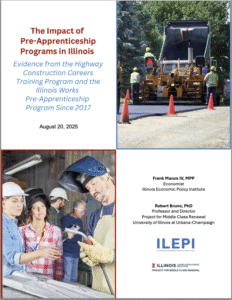
A new study demonstrates the importance of state-funded pre-apprenticeship programs in diversifying the construction trades. The report, published last week by the Illinois Economic Policy Institute and the University of Illinois’ Project for Middle Class Renewal, examines pre-apprenticeship programs across Illinois, including Illinois Works, which supports CWIT’s Women Build Illinois program.

The report shows that state investments in recruiting and preparing people from communities typically underrepresented in the construction trades have created a more diverse pipeline of qualified workers. Specifically, data shows that enrollment of women and Black individuals into construction trade apprenticeships across the state increased by 30% and 31.1% respectively, between 2022 (when the first pre-apprentices were trained under Illinois Works) and 2024, while overall enrollments only increased by 12.8%. Because these placements lead to good jobs with family-sustaining wages, the state’s return on investment is estimated at 4% initially, and 900% cumulatively over 10 years.

The report also confirmed what CWIT’s long history has shown to be true: removing barriers is critical to the success of many aspiring apprentices. Pre-apprenticeship programs that have relationships with union trade apprenticeship programs are most effective at achieving higher job quality and retention outcomes for graduates.

One of CWIT’s Women Build Illinois graduates is cited, saying: “I’m so incredibly grateful for [Chicago Women in Trades], allies, and my sisters who help me push myself to reach my fullest potential. We have each other’s backs. The best decision I ever made was choosing a career in the trades.”

Read the report

The Impact of Pre-Apprenticeship Programs in Illinois

Building a Reputation One Job at a Time

Q: How did you end up in the trades?

“I fell into it completely by accident. I was out of work when a friend got me a job with a residential builder in the north suburbs, where she worked. I started just cleaning finished houses, but my boss kept asking me to take on different, more physical tasks. I kept saying yes because everything was new, and I enjoyed the challenge of discovering what I was capable of.

“Before I knew it, I was throwing out trash, transporting materials, painting, climbing on roofs, doing demolition—ripping up carpets, tearing out walls. One day, I realized people were calling me a laborer. That’s when I started thinking about learning a skilled trade, which led me to Chicago Women in Trades. They helped me get into the Ironworkers.”

Q: What made you choose a career as an ironworker?

“I love the variety. Every day brings completely different aspects of the work, and I enjoy the challenge. But honestly, I lace up my boots every day for the money and benefits. If you’re consistent, dependable, and focused on production, the work can be stable and rewarding. It’s straightforward in that way.”

Q: What was the most valuable part of your CWIT training?

“Getting my attitude ready for work. You need the right mindset for physical labor and the rough environment of the trades. There are days when you’re bleeding and sweating while being yelled at—that’s when you see who can handle it and who can’t. Mental strength is just as important as physical strength.

“The 360-degree awareness training was crucial, too. You have to keep your head on a swivel because a million things can be happening at once, where you might suddenly need to duck or get out of the way. That awareness can save your life.”

Q: What does the CWIT community mean to you?

“I’m grateful to the organization that helped build my career, so I feel loyal to the people at CWIT. It’s this beautiful community of really hard-working, down-to-earth people who are willing to do some of the hardest, most dangerous jobs. With that comes some colorful personalities.

“I remember looking around the room at one of our “no shower” happy hour Fridays and realizing these tradeswomen are exactly the kind of people you’d want to rebuild after a hurricane. Everyone here has skills that can be applied outside of work as well. These are practical, capable people.”

Building Safety Through Experience: A Carpenter’s Transition Into Construction Safety

Eleven years ago, Edith Guerrero walked into Chicago Women in Trades (CWIT) as a student looking for a new direction. After graduating from the TOP program in 2014 and spending over a decade as a carpenter, she’s now transitioning into construction safety, bringing a unique perspective shaped by years of navigating job sites as a woman.

Q: What has your journey with Chicago Women in Trades been like?

“I went through the TOP program 12 years ago, graduating on May 1st. It’s funny because Google just showed me my graduation picture as a memory—happy anniversary to me! I had an instructor who was old school and very tough. You didn’t get a second chance with her, but I’m grateful because CWIT changed my life completely.

“I graduated in May, took the apprenticeship test, and by September, I was already working as a carpenter. I’ve been in the field for 11 years now, but I think it’s time for me to retire my tools. Construction is hard on your body, and I’m getting older. I still want to stay in the construction industry, which is why I’m working in safety.

“I always wanted to give back, and I have always been good at math. So after I graduated in 2014, I started as a tutor, helping the TOP classes. Eventually, I became an instructor myself, and I love it. Teaching feels like my passion now.”

Q: What real-world lessons from your job site experience do you share with students?

“I always tell them the truth—I never lie to them. It’s a hard profession, and you have to have thick skin. I tell them they may face discrimination. Hopefully not, but there could be sexual harassment, or people might not want women there simply because we’re women or minorities. I prepare them by sharing what I went through.

“My journey wasn’t all great—I faced a lot of discrimination. I didn’t speak up at first, because I knew there would be repercussions, but when I finally did speak up, I felt prepared because I knew CWIT had my back. If it weren’t for CWIT, I don’t think I’d be where I am today in every aspect of my life.

“I tell them to prepare for the worst, and if it doesn’t happen, that’s great. But at least they have the tools and knowledge—they know who to contact and how to navigate situations. I don’t want to lie and say the trades will always be amazing, because that’s not always the case.

“But I loved the sense of pride and accomplishment that came with seeing a project come to life, especially working in concrete, where you literally build the foundation for everything else. It’s hard work, but there’s nothing like stepping back at the end of the day and seeing what your hands helped create. I also enjoyed proving to myself and others that women can thrive in this trade. The physical and mental challenge pushed me to grow, and I met some amazing people along the way.”

Q: Now that you’ve transitioned to safety, how can women stay safer on job sites, particularly when it comes to harassment and discrimination?

“First, we need to build a culture where harassment and discrimination are not tolerated, period. That starts with proper training, strong leadership, and having the courage to speak up when something isn’t right. Women should know their rights and feel confident reporting issues without fear of retaliation.

“We also need to ensure there are safe, clean facilities and proper PPE that fits women. As a safety professional now, I’m focused on being a voice for those who feel overlooked and making sure every worker, especially women, feels respected, protected, and supported on the job.

“Creating allies is crucial. There are a lot of great men out there who are willing to help and teach you. Hold onto those mentors—I had a journeyman who took me under his wing and still texts me to make sure I’m okay. He really looked out for me.

I always tell these women that not all men are the same. A lot of them will advocate for you, so hold onto those people because there are men who really take care of you.”

Workforce Ordinance Would Address Gender and Racial Equity on Chicago Construction Projects

By Beth Berendsen

In an exciting development that creates greater economic opportunities for all Chicagoans, Alderwoman Rossana Rodriguez-Sanchez (33), the champion and chief sponsor, introduced the Chicago Construction Workforce Equity Ordinance and garnered 14 co-sponsors at the City Council Meeting on Wednesday, July 16, 2025.

If passed, the ordinance will create mechanisms for community oversight of existing programs that incentivize City contractors to hire women and people of color on City of Chicago construction projects, ensure greater transparency and enforcement from the Department of Procurement Services, and open the doors to more funding for key supportive services that remove barriers for workers.

“I am proud to stand in support of working women, especially in workplaces where women continue to experience discrimination. It is beyond time that the women of Chicago are respected in the building trades,” said Alderwoman Rossana Rodríguez Sánchez. “I hope that in a time where protections for all workers are under attack, this ordinance will advance the City of Chicago’s commitment to protecting the working people who make our city a beautiful place to call home.”

The timing of these policy fixes is critical. Recent data retrieved from Freedom of Information Act (FOIA) requests from the years 2023 to 2024 shows that approximately 6% of work hours on City-managed construction projects are performed by women, and fewer than 12% are performed by African Americans. Even among contractors fined for failing to meet workforce provisions, 27% did not commit to hiring any women on their projects.

At the same time, the Trump Administration has targeted diversity, equity and inclusion initiatives with threats and funding cuts, sending a regressive and harmful message to contractors, impacting tradeswomen’s and tradespeople of color’s ability to find work and feel safe on their job sites.

“Tradeswomen and tradespeople of color have been waiting for the City of Chicago to take action to support us gaining access to jobs and providing safe, respectful worksites,” said Kina McAfee, assistant coordinator for the Mid-America Carpenters Regional Council’s Apprenticeship and Training Program and board member with Chicago Women in Trades. “I’m grateful for the leadership in the City Council and encourage them to move quickly to implement additional enforcement, oversight, and transparency on city-managed construction projects. This is the start of the city investing in its own residents.”

The ordinance is the culmination of several years of work by Chicago Women in Trades (CWIT), our Policy Committee, and our Chicago Construction Workforce Equity Coalition partners, including the Chicago Jobs Council, Women Employed, the Chicago Urban League, Community Assistance Programs, and our longtime collaborators, the Shriver Center on Poverty Law and Revolution Workshop.

“We are at a pivotal moment in our nation’s history,” said Manny Rodriguez, founder and executive director of Revolution Workshop. “We have allowed hatred and bigotry to convince us that DEI is a bad thing and that diversity makes us weak. I am grateful to the leaders in the City Council who have rejected this painful rhetoric and have shown that Chicago will continue to be a place that embraces diversity, equity and inclusion. This ordinance is only the first step in actually creating a more equitable and just construction sector for women and people of color.”

CWIT and the Coalition are focused on moving forward with a hearing and vote of the Contracting Oversight and Equity Committee in the fall, followed by a vote by the full 50-person council later this year. (Read the language and see the growing list of co-sponsors on the City Clerk’s site.)

Take action

We need the advocacy of our community, industry partners, and allies to move this forward!
Take action today to tell your alderperson to support the Chicago Construction Workforce Equity Ordinance.

From Military Service to Heavy Machinery: Operating Engineer Finds Her Calling in the Trades

Romeisha (Ro) Willis operates heavy equipment at one of the world’s busiest airports, but her path to Local Union 150 began with a simple Google search. The Army veteran and business college graduate discovered her passion for operating engineering through Chicago Women in Trades, and hasn’t looked back since.

Q: What does an operating engineer do?

“An operating engineer means I operate heavy equipment. We get to build stuff, but we utilize equipment and vehicles to do it. It’s kind of fulfilling to be able to use a vehicle to move massive things.”

Q: How did your military background prepare you for this career?

“When I was actively in the service, I did some crane operating. I worked at a CRSP (Central Receiving and Shipping Point) yard and performed forklift operations while stationed in Kuwait. When I returned to civilian life, I said, ‘Hey, this is what I want to do for a living. I love what I do in the service, and I’ve been doing this for 10 years.’ When I came to CWIT and learned about each trade, I just gravitated towards becoming an operating engineer.”

Q: What was it like being a woman operating heavy machinery in the Army?

“I did get some pushback from some men at times, especially when I had to teach them. If they were coming on board new, and it was my CRSP yard that I was running with another soldier for seven months, they had to listen to me. But some guys would say, ‘Oh, I don’t want to listen to her. I know what I’m doing.’ And I had to say, ‘No, you don’t. I’ve been running this operation for seven months. Chill out for a second.’ But once they saw that I ran the yard with precision, and I was very professional and disciplined in what I was doing, they would get on board and listen to me.”

Q: How did you discover Chicago Women in Trades (CWIT)?

“I knew I wanted to get into the construction world. I didn’t know what I wanted to do — I didn’t know if I wanted to be an ironworker or a bricklayer. I had no idea. I got my degree in business, so I worked in business management and accounting. But it just wasn’t working for me. It was a good job, but not for me. So I typed in “women in construction” in a Google search, and Chicago Women in Trades was one of the top ones. I made a call, and then I applied.”

Q: How did CWIT prepare you for the workforce?

“We had to keep journals, and we had to update our journals in every class. The journals laid out your tasks like putting in your time sheets. So, if you don’t complete your timesheets, guess what? You don’t get paid. And then being physically fit. I have to jump in and out of a vehicle all day. And it’s a lot when you’re climbing up a vehicle 12 feet in the air! You must be physically fit to do the job. And being on time was a very important thing. Class started at 6, but you needed to be there a little bit before 6. Even when we took trips on Saturdays, we would have to be there 15 to 20 minutes early, just like a job site.”

Q: What are the biggest challenges you face in your work today?

“People don’t trust that I can do the job. They see me and they’re like, ‘Yeah, this is another woman.’ It sucks to say. I get a couple of guys, not too many, because a lot of them are pretty progressive. But there are a few who are like, ‘No, this is not the program,’ and they just don’t accept you right away until you show them the grit, and you can get it done. So you just have to show them.”

Q: How do you handle the skepticism?

“I just say ‘Let me show you.’ With the job that I’m currently on now, I don’t think the person who works with me believed that I could handle the truck — this is a really big truck. I didn’t believe I could handle it at times. And then I could see the doubt on his face, and I was like, ‘Ro, let’s go. You got it.’ So I started being able to straighten my vehicle up more, being able to do things without being told. I learned quickly. That’s my motivation — proving people wrong. If it were a guy who never did the job, he would need to learn as well, right? I’m a human being and I can learn.”

Q: What’s the most rewarding part of your work?

“Learning a new thing. I’m running a dump truck right now. If I get laid off, I’ll call the training site, and they’ll place me in another job, allowing me to learn a new task. Maybe I’ll oil a crane. If I don’t oil a crane, I’ll run an excavator. If I don’t run an excavator, I’ll run a ‘dozer. You get all these skills behind you. So now when they call, they know I’ve done all of these things. I’m marketable for seven other jobs. It’s really rewarding to be able to run so many different pieces of equipment.”

Q: What advice would you give to other women considering the trades?

“Don’t get into a trade because somebody else wants you to do it, or if you think ‘Oh, I’m going to make this amount of money,’  because no amount of money is going to make you happy. I had to learn that the hard way. Let that trade gravitate to you — it’ll call you and pull you. Be patient in picking your career.

“And don’t let people get you down. Don’t let someone stop you from getting into what you want to get into. People are not going to like you at the corporate jobs either. Everybody won’t love you, so make yourself happy.”

Breaking Down Barriers: A Career Developer’s Work to Change Perceptions in the Trades

As a career developer at Chicago Women in Trades, Renee Richardson bridges the gap between skilled tradeswomen and the contractors who need them — a role that demands equal parts persistence, relationship-building and advocacy.

Like many of the women she now serves, Renee faced the same barriers she now helps others overcome. Today, she serves as the liaison between tradeswomen seeking meaningful careers and contractors learning to look beyond outdated assumptions about women’s capabilities.

Q: How did you first discover the trades?

“I was doing art framing at the time, and I hadn’t gotten a raise in over five years. I thought there had to be something better. My mom is a teacher—she was in a union. My dad worked for Caterpillar—he was in a union. I knew about the union benefits, and I thought that if there’s an opportunity to join a union, it’s worth at least looking into. With the art framing, I was working with my hands and using saws, so I wasn’t scared of using saws. I was just really frustrated because it was like a dead-end career. I learned about CWIT from a friend of mine. She said, “Did you hear that you can learn how to weld for free in Chicago?” And I thought that it sounded amazing. However, the welding program was held during the day, and I was working during the day. But, I noticed they had an evening construction class, so I signed up and graduated from the Technical Opportunities Program in 2018.”

Q: How did your career unfold?

“After the TOP class, I tested for five different unions. The first people who called me back were Mill Cabinetry, so that’s what I went with. We got three weeks into the pre-apprenticeship, and then COVID hit, so they shut down the school. They ushered us into the union with only three weeks of experience. And I was like, what are we supposed to do now? Nobody was hiring, and they’re not going to hire somebody who doesn’t know what they’re doing. I had quit my job to do this. Fortunately, I had someone help me get set up with unemployment. Meanwhile, I just kept cold-calling shops in an effort to find anything. I got a job right before Christmas 2020, and they had me working 12 hours every day through Christmas.

“Technically, I worked as a union carpenter for two years. But I was living at work, and I wasn’t making very much money. I learned a couple of things, but it was a lot of me begging for work from anybody. There were some days when I would just sweep the floors for 10 hours.”

Q: How did you come to join the staff at Chicago Women in Trades?

“The fact that I was spending so much time at work and making so little money, I thought there had to be something else. Rebuilding Exchange had a listing for their pre-apprenticeship program, and they were looking for a liaison between the unions and the students to get them in the door for training. I thought, well, I know how to talk to union people. So I applied for it. I got that job and was there for six months. Then I saw the listing for CWIT, and I knew that’s really where I wanted to be. I applied and got the job, and that was almost three years ago.”

Q: What do you do as a career developer?

“It’s a lot of talking to contractors, talking to students, trying to find employment connections. But there are a lot more people looking for jobs than there are people hiring. It’s super exciting when I get someone placed, but then there are 10 people behind that one person who are still looking for work. A lot of the rejection that they’re getting when trying to find work is also happening for me. So it’s just trying to wiggle my way in there, and it’s a lot of building relationships with people for them to pick somebody up eventually.”

Q: What are the most significant barriers you encounter when trying to place women in the trades?

“People just assume that men can lift more or are just more physically able. The misconception is that women can’t do hard labor, and it’s going to be a burden on the employer to hire a woman because she’s not going to produce the same amount as a man.

“Women have to go above and beyond. You have to find an employer that has hired a woman who did an amazing job, and the expectation is that if they don’t do that, then they’ve just wasted their time hiring a woman. When a man goes to the job site, they’re going to have a different experience, which means that they may be trained in different facets, but a woman could be pigeonholed to only do menial stuff, which is a detriment to everyone– the employer and the organization and the individual–no one is winning.”

Q: What do you want contractors to understand about women entering the trades?

“It’s all about following directions, and anybody can build muscle. It’s about showing up and working hard. I feel like that’s not a gender-based issue. I have qualified people who are ready to go. But there’s a lot of pressure on the people that I refer—on the individual—to just be the best they’ve ever had. And not everybody can do that or has the support system. And then, when it falls short, the employer doesn’t want to talk to me anymore.

“They can have one positive experience with a tradeswoman, and that’ll yield positive results. Or they’ll have one experience with a tradeswoman that doesn’t live up to their expectations, and then that relationship suffers.”

Q: What keeps you motivated?

“My work is purpose-driven. Everybody who works at CWIT is in this together, and we’re all just trying to reach the same goal. Just knowing that there are so many people behind this mission, I feel like that keeps everybody going. And it’s very exciting when someone gets hired. I mean, these are good wages, and women should have them too.

“But women must be passionate because if you’re going in for the benefits, there are many things that you have to deal with. You have to really want it. And you have to want it every day. Women also need a support system of people who are behind them and encouraging them. This is not for the faint of heart. The people who pursue and stick with the trades are tough. They’re very tough, they have perseverance, and they’re just badass.”

Statement in Response to Trump Administration’s Elimination of WANTO Grants and Women’s Bureau Programs

Last week brought devastating news to Chicago Women in Trades (CWIT) and workers across America: the Trump administration gutted the Women’s Bureau, the only federal office standing up for women in the workplace. Created by Congress over 100 years ago, this agency is dedicated to ensuring women can earn a living wage and work safely. With staff removed and grant programs cut, this office can no longer do what it was designed to do: help women build careers that provide economic security for them and their families.

Through Democratic and Republican administrations, the Women’s Bureau has been the voice for working women. From analyzing occupational segregation and the gender pay gap to collecting data on childcare access and family leave to increasing public understanding of workplace sexual harassment and the impacts of domestic violence at work, the agency has been an inimitable champion for women’s economic empowerment. Despite being a small agency, it has had an outsized impact; its paid leave grants and research have helped 14 states create paid family leave laws.

The agency has also been a strong advocate for tradeswomen. In 1992, bipartisan legislation created the Women in Apprenticeship and Nontraditional Occupations (WANTO) Act, which provided grants to increase women’s participation in high-wage careers like construction and manufacturing. This crucial legislation helped CWIT and other organizations across the country prepare thousands of women to enter and succeed in male-dominated, high-skilled, high-earning career pathways such as construction and manufacturing, and provide training and guidance for industry partners to support inclusive and equitable workplaces.

CWIT was instrumental in this effort – advocating for the initial legislation, protecting the grants over the past 30 years, and fighting to increase funding for the highly successful program – which only received $6 million in funds in 2024 despite being the only federal program dedicated to increasing women’s access to high wage nontraditional careers.

In the early days of the program, WANTO funded a CWIT-led worksite equity initiative that resulted in a significant increase in women working—a nearly fivefold increase sitewide—and enabled us to provide on-site training and support on topics such as safety and health issues for tradeswomen, sexual harassment prevention, and integration of women into male-dominated crews.

CWIT’s WANTO grant has also supported local pre-apprenticeship training to prepare women to enter the construction trades. Over the last two-year grant period (2023-2024), WANTO significantly contributed to the enrollment of nearly 400 women in pre-apprenticeship training, 80% of whom completed the program. In the last six years, the Women’s Bureau has helped over 12,000 women receive training and retention services to succeed in apprenticeship and other nontraditional fields.

According to the Institute for Women’s Policy Research, the number of women in construction has grown by nearly 30% between 2018 and 2023. This is the direct result of programs like WANTO, which have broken down barriers that have kept women out of these jobs for generations.

Last week, the administration terminated all WANTO grants despite their congressional mandate, with only the Chicago Women in Trades’ grant protected by court order. FARE grants supporting women’s workplace rights were also canceled.

These cuts will likely force organizations nationwide to lay off staff and cancel imminent training programs, and destabilize the Women’s Bureau.

As the ranking member of the U.S. House Committee on Appropriations, Rep. Rosa DeLauro (CT-03) said to Labor Secretary Lori Chavez-DeRemer during the Department of Labor budget hearing on May 15, 2025, “You canceled more than two dozen Women in Apprenticeship and Nontraditional Occupations (WANTO) grants that support women in trades like construction, manufacturing, and information technology. These are some of the most in-demand jobs in communities nationwide, and yet women make up less than 25 percent of the workforce in those sectors.

“Madam Secretary, this administration is recklessly and unlawfully freezing and stealing congressionally-appropriated funds from agencies, programs, and services across the government that serve the American people. The Congress holds the power of the purse. It is in the Constitution. Article I, Section 9, Clause 7.”

Congress created and funded these programs because they work. After 100 years of progress, we cannot allow this essential work to vanish. It’s time for Congress to restore what was never the administration’s to eliminate.

You can help. Take action now and tell Congress to support the Women’s Bureau, its critical work, and its vital funding.

Forging Her Path: Naomi Zermeno Finds Her Calling in Welding

Naomi Zermeno works as an Intermediate Welder at Freedman Seating after graduating from Chicago Women in Trades (CWIT) in June 2024. Her journey into the male-dominated welding industry began with a chance viewing of an Instagram reel that sparked her interest in the craft.

Q: What drew you to welding as a career, and what brings you the most satisfaction in your work?

“I always knew I wanted to work with my hands, and as a woman, I thought, ‘Should I do nails? Should I do eyelashes?’ That was kind of the first girly thing to do. But I never felt like that was going to be it. I had seen welding once on an Instagram reel, and when I looked into classes, CWIT came up. I was super honest in my interview, saying that I didn’t know if I would like it. Then once I started, I felt like I could thrive, and the first time I did it, I knew this was my calling. It felt full circle. What drew me to welding is that I knew I always wanted to work with my hands. It felt badass to say, ‘Oh my God, you’re a welder.’

“The most satisfaction comes from just knowing that I did it—that moment of self-accomplishment. Welding is basically like your own artwork—nothing really depends on how great you are, except for your own skill set. That gives me the highest self-esteem boost. Just knowing that I did it all on my own.”

Q: What’s been your biggest challenge in this field, and how did you overcome it? 

“Honestly, just being a woman. We’re occupying space in a male-dominated field, and that’s an extreme challenge. The industry as a whole is not very accepting of women. There’s always going to be people who don’t want you there just because you are a woman. I think the biggest thing that’s helped me stay calm is being selfish—selfish because I have to do it for myself. I have to prove this for myself and guide myself to know that if I continue to be my best self, nothing else, not being a woman or a minority, is going to stop me. It’s going to be my work that shines through. That’s really helped a lot, just focusing on myself.”

Q: What part of CWIT’s Women in Welding program was most valuable?

“That the classes at CWIT are hands-on is the most valuable aspect. I also liked that we had a really small class. I felt attended to. Both of my instructors were always there for me. It felt nice to have their guidance throughout the program. I’m really grateful to have graduated from CWIT. It feels truly like a sisterhood. I feel like there’s always someone rooting for me.”

Q: What advice would you give to women considering a career in welding?

“Just do it like you mean it. Show up and show out. That’s always going to be my advice to anyone. As long as you have your heart and mind in the right place, I feel like you’re going to thrive, but you have to do it because you want it.”

Preliminary Injunction Issued in CWIT’s Case Regarding Anti-DEI Executive Orders

Today, the U.S. District Court for the Northern District of Illinois issued a preliminary injunction in the case brought by Chicago Women in Trades (CWIT) challenging anti-DEI executive orders. The injunction enjoins the Department of Labor from requiring grantees and contractors nationwide to certify that they do not operate DEI programs to receive funding and from canceling CWIT’s Women in Apprenticeship and Nontraditional Occupations (WANTO) grant. In response, Sabrina Talukder, senior counsel with the Economic Justice Project at the Lawyers’ Committee for Civil Rights Under Law issued the following statement regarding the preliminary injunction in the case:

“The court issued a preliminary injunction that will further allow Chicago Women in Trades to challenge the enforcement of key provisions of the anti-diversity, equity, and inclusion executive orders. These orders target the very nature of its mission, and we are pleased that the critical work Chicago Women in Trades leads for dismantling barriers for women, and especially women of color, in the skilled trades, can continue without threat of enforcement for the time being.

Still, we are working to secure a permanent injunction against this enforcement, for both our client and for other similarly situated organizations that receive federal funds.We must continue to stand for diversity, equity, and inclusion, as this case is a significant step in ensuring nonprofits everywhere can continue to serve their communities without fear of retribution or censorship.”

CWIT is represented by a team of civil rights lawyers from the Lawyers’ Committee for Civil Rights Under Law and pro-bono counsel Crowell & Moring LLP, along with the National Women’s Law Center, LatinoJustice PRLDEF, and Chicago Lawyers’ Committee for Civil Rights.

View the preliminary injunction.

Read: Chicago Women in Trades Challenges Executive Orders Threatening Workforce Development Programs

Update on CWIT’s Legal Action

The court expressed concern about the executive orders’ characterization of equity-focused programs as “immoral and illegal” and questioned the vague, undefined terms targeting equity work.

This is a truly significant first step that allows us to continue our mission, at least for now. We are dedicated to our core purpose: preparing women to enter and succeed in high-wage skilled trades that enable them to put food on their tables and better the quality of life for their families.

Below is the statement from Lawyers’ Committee for Civil Rights Under Law.

Statement from Sabrina Talukder, senior counsel with the Lawyers’ Committee for Civil Rights Under Law’s Economic Justice Project and plaintiff’s attorney regarding the temporary restraining order in a case about the anti-diversity, equity, and inclusion executive orders:

“The court granted a temporary restraining order that will stop the enforcement of key provisions of the anti-diversity, equity, and inclusion executive orders against Chicago Women in Trades (CWIT). This is a critical step in ensuring that the organization can continue the important work it leads – helping women put food on the table through careers in the skilled trades and making job sites safer for thousands of women over the last four decades.

“Now, our focus turns to seeking a preliminary and eventually a permanent injunction to fully safeguard CWIT from being targeted for its work to promote diversity, equity, and inclusion for women in the skilled trades. Organizations like our client in this case promote these programs to create a fair and someday, a level playing field. They are still at risk of being unjustly silenced and defunded. Everyday Americans stand to lose if nonprofits doing the critical work of advancing gender and racial equity cannot continue their work.”

Scope of the temporary restraining order:

  1. The temporary restraining order lasts for 28 days from the day it is issued. The Court has the discretion to extend it for longer.
  2. The scope of the order has three parts. First, the Department of Labor is temporarily enjoined from canceling or pausing any of Chicago Women in Trades’ grants based on the Termination provision. Second, the Department of Labor is enjoined requiring any grantee or contractor nationwide from making any certification. Third, the Government shall not initiate any Federal Claims Act enforcement action against CWIT pursuant to the certification provision.

View the statement on the Lawyers’ Committee for Civil Rights Under Law website:

https://www.lawyerscommittee.org/statement-from-lawyers-committee-senior-counsel-sabrina-talukder-on-temporary-restraining-order-in-anti-dei-executive-orders-case/

Read: Chicago Women in Trades Challenges Executive Orders Threatening Workforce Development Programs

Transforming Lives Through Careers in the Trades

Renee Jones’ career path has taken her from social services to the electrical trade and back to community work, now as the director of programs at Chicago Women in Trades. Her unique perspective bridges different worlds, making her a powerful advocate for women seeking economic independence through careers in the construction industry.

Q: How did you come to work in the trades? 

“I graduated from college in the ’80s and started working in social services. I wanted to make an impact in my community, so I joined Bethel New Life as a community development specialist. One weekend, we volunteered for Habitat for Humanity. I spent that Saturday helping with construction in one of the homes, working alongside electricians who taught me the basics, like pulling wires, connecting them to devices, and putting wire nuts on.

“The electricians noticed my aptitude and suggested I consider becoming an electrician. Initially, I thought, “I’m a college graduate. I don’t need to do construction.” But I enjoyed the work, and when they told me how much they earned compared to my salary (while I still had student loans), it made me reconsider my options. They mentioned that training was free, which was appealing.

‘Two years later, after having my first child and taking time off, a friend told me about a pre-apprenticeship program. I enrolled at Midwest Women’s Center, similar to CWIT, and expressed interest in becoming an electrician based on my Habitat experience. After completing the program, I briefly worked for Burlington Northern Santa Fe Railroad while waiting for the electrician apprenticeship to open. When it did, I left immediately—even though I had an opportunity to move into a management role at the railroad company.”

Q: What was your experience like as an electrician?

“I worked as an electrician for 16 years until the recession hit in 2008. I advanced in the field and eventually became a foreman on job sites. I truly enjoyed working with my hands and was proud of my accomplishments. But with one son in high school and another entering college, I couldn’t manage with inconsistent work. By 2011, I had to make a change to keep my house and support my family. It was difficult, but I needed stable employment to meet my family’s needs.”

Q: How did you find out about Chicago Women in Trades?

“After leaving the electrical trade, I became a case manager working with people with developmental disabilities and mental health issues. I eventually worked my way up to managing two departments.

“When I first returned to professional work, I wondered why I had “detoured” into the trades. When applying for jobs, I would downplay my experience as an electrician and emphasize my earlier professional experience. I couldn’t figure out how to incorporate my trade experience into my professional narrative.

“But when I applied for my current position at Chicago Women in Trades, everything finally aligned. For the first time, I could discuss my entire resume—being a GED instructor, working with people with mental health and developmental disabilities, and my experience as a tradeswoman. During the interview, I felt that all aspects of my background fit perfectly with this role.”

Q: What’s most rewarding about your work?

“I’m passionate about this work partly because it reflects my own journey but, more importantly, because I see the impact it has on families when women gain earning power. It empowers women to leave unhealthy situations. And women typically invest money in their families, which benefits entire communities. When we take someone from a disadvantaged community, give them trade skills, and they progress from apprentice to journey worker, they earn good wages throughout that process. They can provide food, clothing, and shelter for their children and build better lives. Some become homeowners—one woman who graduated just a couple of years ago now owns a three-unit apartment building. These opportunities change the entire trajectory of people’s lives.

“I get goosebumps when people are accepted into the trades or pass a test. Even when they pass a math test in our class, I’m thrilled to see them transition from “I can’t” to “I can.” I felt that same joy when teaching GED classes and watching students master concepts they thought were beyond them.

“When women develop skills to become electricians, carpenters, plumbers, pipefitters, welders, or any skilled trade, they build confidence. That confidence makes them better people, better mothers, better friends, and better partners. Seeing that transformation and hearing how their lives improve is incredibly rewarding.

“When I worked in the trades, I earned enough to buy a house and despite occasional overtime, I was present for my children. Now, I see other women doing the same—earning good wages while maintaining a work-life balance.”

Q: What should people know about Chicago Women in Trades?

“We have a wonderful staff who share the same passion for this mission. It feels good knowing that we have employed people who understand what Chicago Women in Trades stands for and have fully bought into it. They celebrate with our students just as I do—crying, laughing, and jumping for joy when someone gets accepted into a program.

“It’s not just me—we all share that commitment. Everyone cares deeply and works together to find solutions. When our students succeed, it touches all of our lives. I am proud of what we are accomplishing. I hope they know how much they’ve impacted us too.”

The Uphill Battle to Bring Women into Construction Jobs Could Be Lost under Trump

This story was originally reported by Jessica Kutz of The 19th. Meet Jessica and read more of her reporting on gender, politics and policy.

For decades, women have worked diligently to carve out a space in the construction workforce, where discrimination and sexual harassment have kept the predominantly male industry, well, male.

Across the country, they organized for recognition. First in small committees that cropped up in places like Fort Worth, Texas, where in 1953, women came together to create their own support network later called the National Association of Women in Construction. Over the years they worked with their unions and created nonprofits in places like Oregon, Wisconsin, Vermont, Florida and Chicago to advocate for issues affecting women like how to change the hostile workplace culture, and deal with the persistent lack of child care for the early hours they often work.

The government created its own policies to ensure federal contractors were doing their due diligence to recruit and hire from a diverse workforce. But the Biden administration in particular was a boon to the movement, said Jayne Vellinga, executive director of Chicago Women in Trades (CWIT), a nonprofit aimed at bringing more women into construction jobs.

Under Biden, the Commerce Department announced its goal to bring a million women into construction jobs, and created a requirement that recipients of large federal grants for semiconductor manufacturing include a plan for child care. The administration had also passed two laws aimed at boosting infrastructure in the country, which created a demand for skilled workers.

It was the perfect storm of opportunity and funding to expand their programming to bring more women into the workforce. “Our placement numbers have never been higher,” Vellinga said. But when Donald Trump returned to the White House, the forward momentum collapsed almost overnight. In a fiery inauguration speech, he declared he would dismantle diversity, equity and inclusion (DEI) initiatives in the government and create what he calls a color-blind, merit-based society. He promptly issued two executive orders calling DEI policies immoral and illegal and vowed to claw back funding.

Just two days later, CWIT received word that all of its federal grants were under review. These grants constitute 40 percent of CWIT’s budget, and the loss would jeopardize the future of the nonprofit’s work.

“We have complete whiplash,” Vellinga said.

Additionally, the tariffs have disrupted the construction industry, leading to a potential slowdown in projects and consequentially less need for workers, she said.

The nonprofit, whose participants overwhelmingly identify as Black and Latina women, offers pre-apprenticeship training covering topics like workplace safety and basic technical skills. It also partners with unions and industry leaders to advocate for workplaces free of discrimination and harassment, and trains employers in how to make construction sites more inclusive of women.

It’s work that is desperately needed in an industry where one in four women say they are always or frequently harassed, and where one in five LGBTQ+ workers say the same, according to findings from the Institute for Women’s Policy and Research. The Equal Employment Opportunity Commission issued a report in 2023, which found that discrimination was still rampant in the industry, citing several instances of employers not hiring people because of their gender or race.

But that report has been erased from the website, and Vellinga said she feels like the reality of who is being discriminated against is being erased, too. “This narrative that women are taking jobs away from more qualified people has never been true. They are qualified and just asking companies to overcome whatever biases to give them a fair shot.”

The efforts taken to dismantle their work might also not be legal. In February, the nonprofit filed a lawsuit against the administration and several agencies, including the Department of Labor, seeking to declare the DEI executive orders unconstitutional. They are also suing on the grounds that the clawback of federal funds is outside of the jurisdiction of the Executive Branch since they are approved by Congress, and that it’s also infringing on their First Amendment right to free speech.

“What the Trump administration is trying to do is say that for you to receive this federal funding you have to adopt the administration’s viewpoint that DEI is impermissible, and you have to agree with our political agenda,” said Gaylynn Burroughs, a lawyer from the National Women’s Law Center, one of the organizations that is representing the CWIT in court. “The government is not allowed to do that.”

Catherine Fisk, a law professor at the University of California, Berkeley, said in effect the orders chill constitutionally protected speech and threaten legal action against organizations who cannot know what it is that they are prohibited from doing because it’s so vague. “That is both a First Amendment violation that is broadly prohibiting advocacy and a due process violation,” she said: “The government is threatening to punish people without being clear of what they are being punished for.”

The 19th reached out to the Department of Labor, The Office of Management and Budget and the Department of Justice, which were all named as defendants, but did not hear back by press time.

Promoting diversity, equity and inclusion is not illegal, and these executive orders are a way to attack ideals fundamental to American society, Burroughs said. “When you peel it back, what we’re really talking about is the ability for people to not be discriminated against,” she said. “We do a disservice when we’re saying that it’s an attack on DEI. It’s an attack on civil rights, on workplace anti-discrimination.”

She continued: “The message that is being conveyed is, if you are not a white heterosexual man, and you are in public life, or you are in a job where you are successful, that you must have gotten there because of some unfair advantage, and that is really a poisonous way of thinking.”

In addition to endangering federal funding for DEI work, the Trump administration also rescinded an executive order that had been in place since 1965. The order prohibited federal contractors from discriminating in its hiring practices and required them to take affirmative actions to ensure that it was trying to recruit and hire women and people of color for its jobs, which are paid for with taxpayer dollars and in theory should be accessible to anyone who is qualified. Because some groups have been so effectively shut out of certain jobs, that work can look like providing opportunities for specific groups like women to learn skills and receive training to be competitive applicants in the job pool.

To help enforce the 1965 order, the Office of Federal Contract Compliance Programs could perform audits on job sites to also ensure the workplaces were protecting employers equal rights. Jenny Yang, the former director of the office under Biden, said in some cases an audit has uncovered that women don’t have proper fitting personal protective equipment which can pose a safety risk, or are being harassed or discriminated against in other ways.

“Having an OFCCP investigator auditing those practices is what often catalyzes change because workers see that the federal government is there,” she said. It also offers workers an opportunity to report issues with their workplace anonymously versus having to file a complaint against their employer, which can open them up to retribution.

The agency has also played a role in correcting pay discrimination by conducting pay audits, said Yang. From 2014 to 2024 the agency obtained $261 million for employees and job seekers who were discriminated against. That money went to over 250,000 employees and applicants. That number included about 25,000 White people and men, who were alleged to have been discriminated against. “Our anti discrimination laws protect everyone,” Yang said.

But now that agency is being whittled down to a ghost of itself, with reports that the Department of Labor plans to lay off 90 percent of staff. The order announcing the rescindment said the work going forward would only apply to veterans and people with disabilities.

“The rescission of the executive order will have devastating consequences for workers and especially for women in the trades, many who have said they wouldn’t have an opportunity to support their families because of the discrimination many women face in that industry,” said Yang.

That’s because the opportunities afforded to women without college degrees pay much differently than those offered to men. It’s a phenomena known as occupation segregation, said Vellinga. “Our culture does not value the caretaking role, the roles that women have traditionally played, as much as they have valued the roles that men have traditionally played,” she said.

An example she likes to use is the difference between how the country pays certified nursing assistants, of which 88 percent are women, versus carpenters. Neither job requires a college degree, and both are physically demanding. But the median wage for nurse assistants is just $40,000 compared to $61,000 for carpenters according to the U.S. Bureau of Labor Statistics. Carpenters are also more likely to have pensions.

Now she fears that with a loss of protections in the workplace, and a fear from employers to even engage in DEI, those opportunities for women will just dry up. And her organization’s ability to bridge the gap in employment will be crippled.

If their federal funds are canceled they won’t be able to offer as many trainings, they won’t be able to work with employers to create workplaces free of discrimination and harassment, and they won’t be able to do as much outreach to educate women and girls that these opportunities even exist in the first place.

“For an organization who has spent decades trying to change a culture, we are still so far from the finish line,” Vellinga said. Nearly 96 percent of construction workers, to this day, are men. “It is really incredible that you could not acknowledge that reality.”

Metal Masters: RH Simpson Sparks Opportunity for Women Welders

RH Simpson, a century-old ornamental and miscellaneous metals fabricator in Elmhurst, Illinois, has been working with Chicago Women in Trades (CWIT) to provide hands-on welding experience for students in the Women in Welding program. The partnership showcases how industry veterans can help create new opportunities in the construction trades. Kristopher Haas, the president of RH Simpson, talks about the collaboration with CWIT.

Q: How did RH Simpson come to partner with Chicago Women in Trades (CWIT)?

“We connected to CWIT through Power Construction, a company we’ve worked with for over 40 years. About two years ago, they introduced me to Renee Jones at CWIT. After my initial visit, we arranged a tour of our fabrication shop in Elmhurst with one of their welding classes. Since then, we’ve hosted the class seven times.

“We decided to get involved because we’ve been part of Chicago’s construction industry for over 100 years, and I saw CWIT as an organization we could meaningfully support. I’ve been in this industry since I was 16, and I’m passionate about seeing positive change. Personally, as a husband to an amazing wife who loves carpentry, a father to three daughters, and a brother to three awesome sisters, I want to support organizations that empower women to build careers and pursue their dreams—no matter the industry.”

Q: What inspired the field trips and hands-on training for the Women in Welding program?

“This is a very valuable part of the CWIT training program. Welding spans many industries, and even in construction, we have both fabrication and installation sides with different techniques and work environments. We provide an introduction to ornamental and miscellaneous metal fabrication.

“During visits, students are immersed in a working shop environment—it’s loud, with welding arcs flashing, grinding sparks flying, and materials being moved around them. About 60% of our team provides instruction while others continue normal operations. Students work on actual projects in production and develop skills beyond just welding. They experience what it’s really like to be part of a fabrication team, which is completely different from field installation work, where conditions are less controlled and equipment more portable.

“Students get to try everything: tig-welding delicate pieces, cutting metal with oxy-fuel torches, operating punching and shearing equipment, and finishing work through grinding and polishing—all skills our best fabricators need to master. This hands-on variety gives them a realistic picture of daily shop life beyond classroom training. And there’s always excitement when they try carbon-arc gouging!”

Tradeswomen Advocate for Equity at Illinois State Capitol

Over 200 tradeswomen and advocates from across the state gathered at the Illinois State Capitol on Wednesday, March 5, for the second annual Tradeswomen Take Over Springfield advocacy day, pushing for greater opportunities for women in the construction trades.

Chicago Women in Trades (CWIT) staff and tradeswomen came to Springfield to meet with legislators about House Resolution (HR) 161. Introduced by Deputy Majority Leader Lisa Hernandez, the resolution reaffirms Illinois’ commitment to expanding workforce opportunities in the trades, particularly for women who still make up less than 5% of the construction workforce.

Participants shared their experiences and lobbied lawmakers on policies to improve recruitment, retention, and support for women in construction careers through enhanced accountability measures, equity initiatives, and continued investment in training programs.

Illinois has invested millions in Illinois Works and the Highway Construction Careers Training programs, which have strong records of graduating women and people of color for careers in the construction industry.

Recent executive orders threatening to roll back hard-won progress for women in the trades made this advocacy day more important than ever. CWIT calls on our state leaders to stand firm on Illinois’ values!

CWIT Recognized as Influencer by Landmarks Illinois

Executive Director Jayne Vellinga accepted the award on behalf of CWIT. In her remarks, Jayne underscored the urgent challenges facing diversity initiatives in the construction industry today and CWIT’s ongoing commitment to creating opportunities for women in the trades:

What an honor it is to receive this recognition from Landmarks Illinois. Especially given the threats that diversity, equity, and inclusion initiatives and Chicago Women in Trades as an organization are currently facing.

One of the first acts of the new administration was the revocation of Executive Order 11246, the regulation that required federal contractors to make good faith efforts toward a diverse construction workforce, including a goal for women at 6.9%. Two days later, we received communication from five federal grant programs that our grants were under review and that if found to be in conflict with the new anti-DEI executive orders, they would be canceled. That the federal government is taking such pains to erase decades of progress in leveling the playing field for women in the trades, who still make up less than 5% of the construction workforce, is alarming, and I want to use my remaining 30 seconds to flex my influencer muscle.

In truth, the real power to change the culture of the construction industry resides not with the federal government but right here, in this room. If you are an owner, a developer, a contractor, or a union that believes that a person’s potential should not be limited by their race or gender and understands what a more diverse workforce brings to the table, we need you to act with intention to recruit and retain women in your workforce.

Diversity, equity and inclusion are not illegal or immoral, they are the values we need to create a just society where all Americans can thrive. If even half of you embrace this vision of the future, we can have more impact than any government regulation on the lives of Chicago tradeswomen. CWIT has lots of ideas and resources for you and we hope to hear from you soon!

Chicago Women in Trades Challenges Executive Orders Threatening Workforce Development Programs

Today, Chicago Women in Trades (CWIT) filed a lawsuit challenging recent executive orders that threaten vital workforce development programs serving our community. For more than 40 years, CWIT has prepared women for successful careers in the trades through comprehensive training and industry partnership programs. These executive orders put this essential work at risk. This action threatens not only our organization’s work but also the broader goal of building a skilled, diverse workforce that strengthens our entire industry.

We believe in creating fair access to opportunity and in standing up for our mission when it’s threatened.

Below is the full press release from Lawyers’ Committee for Civil Rights Under Law detailing the legal challenges.


For Immediate Release
February 26, 2025

Media Contact
LCrawford@lawyerscommittee.org
lawyerscommittee@fenton.com

Civil Rights Groups Sue Trump Administration to Challenge Anti-DEI Executive Orders on Behalf of Nonprofit Serving Diverse Group of Women in the Skilled Trades

Washington, DC — Chicago-based nonprofit Chicago Women in Trades (CWIT) filed a new lawsuit challenging  President Donald Trump’s recent executive orders that severely restrict and chill Diversity, Equity, and Inclusion initiatives. Approximately 70 percent of CWIT’s participants identify as Black and Latina women. As a recipient of federal grant programs, the recent executive orders directly threaten to eliminate CWIT’s ability to continue its critical role in expanding economic opportunity and mobility for women. The executive orders call for the termination of “equity-related” federal grants and contracts, which nonprofits like CWIT rely on to provide life-changing services to women in non-traditional occupations. CWIT prepares women across the country to enter and build careers in the high-wage skilled trades. Black and Latina women remain severely underrepresented in this sector due to racial- and gender-based structural barriers, making CWIT’s work vital for opening doors to economic opportunity.

The executive orders create a dilemma: either discontinue providing critical services to historically marginalized communities for fear of triggering legal liability, or lose critical federal funding. In doing so, the anti-diversity executive orders silence organizations from providing vital programs and services that are core to their missions.

The lawsuit argues that the executive orders make no effort to define or describe the types of “DEI” activities or speech that might cause organizations to lose their federal funding or contracts. This has caused absurd results across federal agencies–from the U.S. Air Force temporarily removing training videos about the contributions of the Tuskegee Airmen and Women Airforce Service Pilots during World War II, to OSHA’s dismantling of workplace violence prevention resources. The lawsuit asks the court to declare sections of both executive orders unconstitutional and grant permanent injunctions to stop their future enforcement.

CWIT is represented by a team of civil rights lawyers from the Lawyers’ Committee for Civil Rights Under Law and pro-bono counsel Crowell & Moring LLP, along with the National Women’s Law Center, LatinoJustice PRLDEF, and Chicago Lawyers’ Committee for Civil Rights.

“The President’s executive orders are part of a calculated effort to erode civil rights protections,” said Katy Youker, director of the Economic Justice Project at Lawyers’ Committee for Civil Rights Under Law. “Diversity, equity, and inclusion are not illegal, and efforts to promote them do not violate federal civil rights laws. In fact, federal civil rights laws were passed to forward these very principles. The Lawyers’ Committee is helping to take this matter to court to ensure the administration cannot overextend its powers to silence American values that promote equal opportunity.”

Executive Order 14173 also requires the head of each executive agency to cancel all financial assistance for “diversity,” “equity,” and “like” activities and to include in every contract or grant award a term mandating that recipients certify they do not operate any programs promoting “DEI,” even those falling outside of their federally-funded work. The lawsuit argues that these requirements exceed the President’s authority, as the Constitution does not give the President or other executive branch officials the right to usurp Congress’ spending power by unilaterally canceling congressionally authorized funds or conditioning grant awards to chill speech.

“This legal action defends programs that have opened doors for women in the trades for over 40 years,” said Jayne Vellinga, executive director of Chicago Women in Trades. “The executive orders in question threaten to dismantle equity-focused initiatives with proven success records. Despite our work, women still represent only 5% of Illinois’ construction workforce. The problem of equity is far from solved, and pretending that institutional barriers don’t exist won’t make them disappear. Our communities deserve better—they deserve programs that create real opportunities for economic mobility and strengthen our industries with skilled, diverse talent.”

“Equity is not a bad word; it’s a commitment to ensure that everyone—including Black and Brown people—has a fair shot at success,” said Sabrina Talukder, senior counsel with the Economic Justice Project at the Lawyers’ Committee for Civil Rights Under Law. “CWIT’s programs open doors that were once locked to women because of gender- and race-based barriers. The pathways to economic opportunities that CWIT has forged help women put food on the table, address an  industry-wide shortage of workers in the skilled trades, and fortify economic stability for all Americans.”

“The executive orders at issue here are a naked attempt to create confusion and make DEI a boogeyman,” said Gaylynn Burroughs, senior vice president for education and workplace justice at the National Women’s Law Center. “We are proud to represent CWIT and fight this lawless attempt to push women out of good paying jobs in the trades and close off pathways of opportunity for women, people of color, and people with disabilities. Diversity, equity, and inclusion aren’t a threat to workers, but these unconstitutional actions to end equal access to opportunities are.”

“These executive orders attacking diversity and equity are not only unconstitutional, they are un-American. What makes this country great is the diversity of its people and the unique perspectives they bring to enrich our democratic institutions and workplaces,” said Aneel Chablani, vice president and legal director with Chicago Lawyers’ Committee for Civil Rights. “These executive orders propagate a false historical narrative in an attempt to roll back hard-fought civil rights protections and we are proud to stand with our partners in challenging them.”

“Diversity, equity, and inclusion are not illegal—they are the foundation of a just and thriving society,” said Lourdes M. Rosado, president & general counsel, LatinoJustice PRLDEF.  “Yet, these executive orders are an illicit, dangerous and deliberate attempt to roll back hard-won civil rights protections, creating fear and confusion to silence progress. LatinoJustice fully rejects these efforts and stands united with our partners in advancing equity and inclusion, affirming that every individual, regardless of race or background, deserves a fair chance to succeed and contribute to our shared future—no exceptions.”

Read the complaint.

###
About the Lawyers’ Committee for Civil Rights Under Law: Lawyers’ Committee for Civil Rights Under Law is a nonpartisan, nonprofit organization, formed in 1963 at the request of President John F. Kennedy to mobilize the nation’s leading lawyers as agents for change in the Civil Rights Movement. Today, the Lawyers’ Committee uses legal advocacy to achieve racial justice, fighting inside and outside the courts to ensure that Black people and other people of color have the voice, opportunity, and power to make the promises of our democracy real. The Lawyers’ Committee implements its mission and objectives by marshaling the pro bono resources of the bar for litigation, public policy, advocacy and other forms of service by lawyers to the cause of civil rights.

Making Math Add Up: A Conversation With CWIT’s Instructional Coordinator Miss Kitty

After decades of teaching in Pittsburgh and Chicago public schools and a position as a coach for math teachers in a program at the University of Illinois, Chicago (UIC), Miss Kitty decided it was time for a change. Long pursued by Lauren Sugerman (one of CWIT’s co-founders) to join the CWIT team, Miss Kitty finally agreed. Her teaching philosophy is simple: collaboration and validation.

Q: How did you end up teaching math at Chicago Women in Trades?

“For years, Lauren kept asking me to teach here, and I always declined. I felt intimidated by the construction world. I kept saying, ‘You’ve got elevator operators, plumbers, carpenters – I don’t know anything about that.’ But Lauren would say, ‘You don’t have to know the trades; you just have to know the math.’ After COVID hit, I needed to step back from my other teaching work. When Lauren reached out again, I finally took it as a sign. Now when I see Lauren, I tell her, ‘You just never gave up on me, and here I am.’”

Q: What’s different about teaching math in a trades environment?

“The first real hurdle isn’t the math itself – it’s self-confidence. Many students come in carrying negative experiences from past math classes. The math isn’t that advanced – around fourth or fifth-grade level – but it directly applies to construction work. We do activities that aren’t just in the packet. For example, when teaching perimeter, I have them get their tape measures and work with real objects. In the welding class, we examine file cabinets and discuss how measurements might be off slightly and what that means for the work. It’s about making math meaningful and practical.”

Q: How do you help students overcome their fear of math?

“I start by holding up a pencil and asking why math teachers always require using one. It’s because of the eraser. You’ll make mistakes, and that’s where the real learning takes place. If you think you can come here and make no mistakes, you don’t need to be here. I’ll even make mistakes myself. My mentor Margie taught me about how people learn math – there’s a consistent trajectory whether you’re working with children or adults. She showed me that it’s not about memorizing rules or doing endless practice problems, it’s about understanding concepts and making connections.

“We had one welding program graduate who struggled with basic multiplication. She was preparing for the ironworkers’ test – one of the most challenging, with over 200 pages of word problems! We worked together remotely over Zoom, and her determination was incredible. The night before her exam, we talked about shutting down that little evil twin in her head saying she couldn’t do it. Through her determination and perseverance, she passed. That was two years ago, and she’s still working as an ironworker today.”

Response to the Firing of EEOC Commissioners

Chicago Women in Trades (CWIT) is outraged by the firing of Equal Employment Opportunity Commissioners Jocelyn Samuels and Charlotte Burrows. This action directly threatens an independent agency that protects workers from discrimination based on gender identity, sexual orientation, race, religion, national origin, age, disability, and other characteristics in workplaces across America. With two commissioners removed, the EEOC now lacks the quorum needed to carry out its vital work.

We are deeply grateful to Jocelyn Samuels, a true champion for our community. She spent time with our staff and tradeswomen, listening to their experiences and offering guidance on addressing workplace harassment and discrimination in the construction industry. Jocelyn’s genuine connection with CWIT and tireless advocacy for equal opportunity in the trades have strengthened our work and inspired our community.

These firings are a direct attack on workers’ rights and the EEOC’s core mission. We stand in solidarity with the dismissed commissioners and will continue to fight for workplace protections for all.

Read Chicago Women in Trades and EEOC Vice Chair Host Roundtable on Harassment in the Workplace

Response to the End of Affirmative Action (Executive Order 11246)

Chicago Women in Trades co-founder and Strategic Advisor Lauren Sugerman shares her personal story as part of CWIT’s call to action to construction contractors to commit to making good jobs available to all qualified workers.

On Tuesday, January 22, President Trump signed an Executive Order (EO) to rescind Executive Order 11246, which mandates that federal contractors take affirmative action to ensure equal employment opportunities. This is not just an abstract federal policy for me; EO 11246 changed the course of my life when I was 21. I transitioned from working as an interpreter for the Census Bureau to being hired as an elevator constructor. My salary increased by $3 per hour immediately, and within six months, I was earning $11.29 per hour—nearly triple what I made at the Census Bureau. The position also provided valuable benefits such as on-the-job training, health care, a pension, and union protections. 

I would not have been hired for this entry-level job were it not for the application of EO 11246 to the contractor awarded the project to maintain and repair elevators at Chicago’s Housing Authority, which receives federal funds. Equally important was the enforcement by the Department of Labor’s Office of Federal Contract Compliance and the federal compliance officer whose oversight of the contract compelled the company to comply.

Before I entered my trade, only two other women were working in the field. Thanks to EO 11246, our numbers increased to almost a dozen by 1980. Although we have faced threats of its rescission over the past 40 years, it remains a vital tool for opening doors, one that tradeswomen depend on and that Chicago Women in Trades (CWIT) actively works to protect. Because of EO 11246, CWIT has been able to prepare and support thousands of women, ensuring they can enter and thrive in the skilled trades.

Equal opportunity hiring practices are not just about equity; they are essential for accessing untapped talent pools, which are crucial to meeting the growing demand for skilled labor in the construction trades. Currently, women comprise only 4% of construction trades workers despite demonstrating equal capability and dedication.

The executive order to eliminate equal opportunity requirements for federal contractors requires our immediate and unified response. As partners in the construction industry, we must reaffirm our commitment to making good jobs available to all qualified workers.

We call on all construction contractors to:

1. Maintain equal opportunity hiring and non-discrimination programs, irrespective of federal requirements.

2. Continue partnerships with organizations like Chicago Women in Trades that build and support our skilled workforce pipeline.

3. Publicly affirm that discriminatory practices have no place in our industry, whether in contracting, worksites, apprenticeship programs, or unions.

While we work to restore EO1126, we remind our community that the collective will of tradespeople and contractors can sustain these affirmative actions. Chicago Women in Trades is here to facilitate these efforts through training, partnerships with industry and unions, and technical assistance to businesses, government agencies, and policymakers. And to our community of tradeswomen, know that CWIT will continue to stand with you to fight for an industry that provides equal opportunity and inclusion.

Construction excellence can only be achieved by drawing on all available talent. Companies that maintain inclusive practices will be rewarded with competitive advantages in workforce development, innovation, and project delivery. And our country will be rewarded with greater opportunities for women and people of color to achieve economic equity.

Read the History of Executive Order 11246

woman wearing red hard hat and orange reflectorized jacket

OSHA Says Personal Protection Equipment Must Fit Properly

Chicago Women in Trades (CWIT) was excited to see the Department of Labor’s Occupational Safety and Health Administration (OSHA) finalize a rule that requires that personal protective equipment (PPE) properly fit any construction worker who needs it. As of January 13, 2025, it is now an enforceable standard that construction employers provide PPE that fits properly for the work to be performed to guarantee the health and safety of all of their employees, which has been standard for other industries. The new standard impacts harnesses, gloves, safety glasses, vests, respirators, and other critical PPE. 

CWIT provided a comment when the rule was first proposed in 2023, raising the issues faced by tradeswomen who often encounter PPE that does not fit their bodies. We collected stories from our community, including examples of safety hazards that had put them in danger of injury at work due to improperly fitting PPE and feeling excluded on site when given there was not PPE available to fit them safely. 

Our comment was signed by 18 other local and national advocacy organizations who supported these changes: https://www.regulations.gov/comment/OSHA-2019-0003-0098

Read the press release here: https://www.osha.gov/news/newsreleases/osha-national-news-release/20241211

USA flag near municipal building

CWIT’s Response to the 2024 Presidential Election Results

By Jane Vellinga

I’ve spent the past 24 hours trying to find my footing in this new reality, to find the right words under the weight of uncertainty and concern. As we prepare for the new administration, I want to speak directly to the tradeswomen in our community. Our mission to uplift women isn’t just a statement on paper. Chicago Women in Trades remains steadfast in our efforts to advocate for equal access for women and nonbinary individuals to secure careers in the skilled trades.

For many years, we have collaborated with government agencies to develop strong policies and secure funding to cultivate a workforce of women equipped with the skills essential for America’s infrastructure and economic growth. Our efforts are vital as skilled trades are increasingly in demand, and diversity initiatives are under attack.

At this critical moment, we won’t back down in our efforts to address the overwhelming challenges women face in this field and in their own lives. We will continue to advocate for workplace safety, equitable wages, equal employment opportunities, and a zero-tolerance policy for harassment. We look forward to strengthening our collaborations with local government and industry partners and finding new allies to ensure that women are recognized, respected, and valued in the workforce and that the progress to center gender and racial equity across all institutions is not reversed.

To every woman who has picked up a tool or put on a hard hat, we have your back. We believe in our collective power to make change. We’re ready for the fight–whatever lies ahead.

Chicago Women in Trades Spearheads RISE Up Program With Power Construction

CHICAGO, IL—Chicago Women in Trades (CWIT) and Power Construction are pleased to announce a partnership to implement the RISE Up for Equity Respectful Worksite program developed by ANEW. This initiative marks a significant step towards fostering worksites that provide women and other underrepresented workers with equitable opportunities to thrive and advance their careers in the construction industry.

RISE Up, which stands for Respect, Inclusion, Safety, and Equity, is a comprehensive training program designed to create and maintain safe, inclusive, and productive work environments. The program offers tailored training modules for executive leadership, managers, and workers, including specialized areas such as bystander intervention.

ANEW, founded in 1980, has a long-standing mission to increase the representation of women in construction trades. As an affiliate of ANEW’s RISE Up program, Chicago Women in Trades will facilitate the delivery of RISE Up training to its partners, including employers like Power Construction.

Power Construction has agreed to pilot this innovative program, beginning with executive-level training. This collaboration underscores Power Construction’s commitment to cultivating a diverse, equitable, and inclusive workplace culture.

“We are pleased to partner with Chicago Women in Trades to bring the RISE Up program to our organization,” said Sean Glowacz, Director of Community Development, AICP for Power Construction. “This initiative aligns perfectly with our values and ongoing efforts to create a safer, more inclusive and equitable work environment.”

“The RISE Up program represents a significant step forward in our efforts to transform the construction industry,” said Jayne Vellinga, Executive Director of Chicago Women in Trades. “We’re excited about Power Construction’s demonstrated leadership in implementing this training, setting a new standard for inclusivity, and addressing harassment in the field. We look forward to forming similar partnerships with other leaders in the industry.”

For more information about RISE Up, contact:

Lark Jackson
Director, National Center
Chicago Women in Trades
ljackson@cwit.org

About Chicago Women in Trades

Chicago Women in Trades (CWIT) was established in 1981 by tradeswomen to support and advocate for women in nontraditional occupations. CWIT works to build women’s access to and promote their advancement in the skilled trades through training programs, policy and advocacy, and technical assistance to employers and unions seeking to create inclusive workplaces.

About Power Construction

Power Construction Company is a 98-year-old family and management-owned firm that is focused primarily on the greater Chicago metro area. Their unique business model and values-based approach mean that their leaders are actively engaged, their employees build long-term careers and we foster trade partner relationships that drive customer value. Most importantly, it allows Power to fulfill a fundamental promise: to exceed expectations, every time.

About ANEW

ANEW was founded in 1980 by people dedicated to improving the access and advancement of women in non-traditional career pathways such as construction and manufacturing. As the oldest running pre-apprenticeship program in the nation, ANEW continues to focus on equity and inclusion in the construction industry for both women and people of color. RISE Up (Respect, Inclusion, Safety, and Equity) in the Construction Trades was created by Karen Dove, Executive Director of ANEW to address the need for a shift within the culture. Through industry-leading workplace consulting and training, RISE Up has been committed to aiding contractors and subcontractors in the construction management sector in establishing and sustaining an atmosphere marked by productivity, safety, and equity.

###

Chicago Women in Trades and EEOC Vice Chair Host Roundtable on Harassment in the Workplace

On July 24, the Equal Employment Opportunity Commission’s (EEOC) Vice Chair, Jocelyn Samuels, visited Chicago Women in Trades (CWIT) to discuss a persistent challenge in the construction industry: workplace harassment.

The meeting brought together tradeswomen leaders and industry stakeholders following the EEOC’s June release of “Promising Practices for Preventing Harassment in the Construction Industry.” The comprehensive guide, developed with input from CWIT and its national partners, offers practical solutions for creating safer job sites.

During a candid closed-door session, tradeswomen shared their firsthand experiences with Vice Chair Samuels. Their stories highlighted ongoing challenges faced by women, especially women of color, who continue to encounter sexual harassment and discrimination on construction sites– often without clear paths to resolution.

“We have many tools that we use to enforce the laws,” Samuels told the group. “A lot of the work that we want to do is at the front end so that we can make sure you know your rights, and contractors, subcontractors and project owners know their responsibilities. Because compliance at the front end is always better than us having to sue people at the back end.”

During the roundtable, several industry partners discussed actions they are already taking that are aligned with the EEOC’s recommendations. Power Construction, for example, has partnered with CWIT to roll out the RISE Up respectful worksite training program, demonstrating how companies can take real action toward change. Local unions and apprenticeship programs also shared ongoing efforts to roll out training and increase accountability for harassment in the industry.

“These guidelines aren’t just recommendations – they’re a roadmap for creating real change in the construction industry,” said Beth Berendsen, Policy Director at CWIT. “When companies implement these practices, they’re not just protecting workers; they’re building a stronger, more inclusive industry that benefits everyone.”

CWIT’s executive director, Jayne Vellinga, expressed optimism about the meeting’s outcomes while emphasizing the need for continued action. “We are relying on our industry partners to do the right thing by all their employees,” she said. “Today’s roundtable is encouraging. We hope that more construction leaders and government agencies will take real action, leading to safer and welcoming workplaces for all.”

Read the EEOC’s Guidelines: Promising Practices for Preventing Harassment in the Construction Industry.

Labor Secretary Su Announces Major Infrastructure Investment at Chicago Women in Trades

Acting U.S. Labor Secretary Julie Su highlighted the Biden-Harris administration’s commitment to inclusive infrastructure jobs during her May 23rd visit to Chicago Women in Trades (CWIT), where she promoted federal investments that are creating local opportunities to diversify the Chicago area’s construction workforce.

Su toured CWIT’s training facility alongside leaders from the Illinois Departments of Transportation, Labor, and Commerce and Economic Opportunity. The visit showcased CWIT’s no-cost training programs that prepare women for careers in the trades, supported in part by a 2022 Women in Apprenticeship and Nontraditional Occupations grant.

During the speaking program, community members shared how the administration’s Investing in America agenda impacts their lives, emphasizing the importance of creating job opportunities in historically underserved communities. The Illinois Department of Transportation also announced an effort to pilot best practices to support the workforce on an upcoming highway project in partnership with CWIT.

Read more about Tradeswomen Building Infrastructure.

Partnership With Illinois Department of Labor for $1.35 Million Grant to Boost Women in Construction

The Illinois Department of Labor (IDOL) has been awarded a $1.35 million federal grant to fund the Tradeswomen Building Infrastructure (TBI) initiative, which aims to increase women’s participation in the construction trades. The announcement was made on August 23rd during an event attended by Governor JB Pritzker, Acting U.S. Secretary of Labor Julie Su, and representatives from the U.S. Department of Labor’s Women’s Bureau and IDOL.

To be implemented in partnership with Chicago Women in Trades (CWIT), the grant builds upon CWIT’s National Center for Women’s Equity and Apprenticeship’s previous work. It comes at a crucial time, coinciding with the rollout of the $1.2 trillion Bipartisan Infrastructure Law (BIL), which is expected to create numerous career opportunities in the construction trades.

The TBI initiative is a collaborative effort with tradeswomen organizations nationwide, designed to accelerate state and local efforts to increase women’s inclusion on BIL-funded construction projects. The program aims to ensure equitable industry representation of historically excluded groups.

The TBI initiative will address barriers, including toxic work environments and inconsistent employment opportunities. Key components of the program include:

  1. Providing guidance and technical assistance to industry partners on recruitment and retention strategies.
  2. Advocating for policies and practices outlined in CWIT’s Infrastructure Equity framework.
  3. Supporting the expansion of pre-apprenticeship training and essential supportive services.

Illinois Department of Labor Director Jane Flanagan emphasized the grant’s objectives: “It’s our goal that with this grant, working alongside Chicago Women in Trades, we can continue transforming the public construction and infrastructure workforce to include more women. That starts with greater access to the industry, apprenticeships, and using data to measure retention and opportunities for advancement.”

This grant builds on CWIT’s efforts from a previous grant from the Women’s Bureau funded in the fall of 2022, which supported tradeswomen’s organizations in 11 states and municipalities to develop workforce-equity plans for BIL-funded projects.

The TBI initiative is supported by partnerships with the U.S. Department of Labor’s Women’s Bureau and the Illinois Department of Labor, working together to implement the program’s major components and drive meaningful change in the construction industry’s workforce demographics.

New Law Requires State to Report Who Gets Work Hours on Public Projects

Illinois Governor JB Pritzker signed a groundbreaking law that will shine a light on who gets hired – and who gets the most work – on taxpayer-funded construction projects. The law, known as HB 3400 (Public Act 103-0347), takes effect on January 1, 2024, and was championed by Chicago Women in Trades to promote fairness in the construction industry.

Construction companies working on public projects are already required to report detailed information about their workers to the state. This includes tracking the number of hours each person works, broken down by gender, race, and skill level. HB 3400 amends the Prevailing Wage Act to require the Illinois Department of Labor to produce improved quarterly reports on the demographics of workers on publicly funded construction projects. The data will be collected by project and contractor, breaking down worker information by gender, race, ethnicity, trade, and skill level, with special attention to total work hours performed.

The new reporting requirements address a longtime concern from women in the trades, especially Black and Brown tradeswomen, who often find themselves getting fewer work hours than their white male coworkers. Less time on the job means less experience, slower career advancement, and reduced access to essential benefits, such as health insurance and retirement savings.

“We hear from women all the time about struggling to get enough hours to support themselves and advance in their careers,” said Beth Berendsen, director of policy and advocacy at Chicago Women in Trades. “This law will finally give us the data to show exactly what’s happening on construction sites across Illinois.”

While more work remains to achieve true equality in the construction industry, this new transparency law marks an important first step toward holding employers accountable. The victory came after tradeswomen across Illinois contacted their legislators and shared their personal stories about the workplace barriers they faced.

Chicago Women in Trades is grateful to the bill’s champions in the Illinois General Assembly: Representatives Will Davis and Will Guzzardi, and Senators Mattie Hunter and Sara Feigenholtz. The organization also recognizes Governor Pritzker and the Illinois Department of Labor for their commitment to workplace equity.